
Comparer les modèles
iPhone 17 vs iPhone Air
- Garantie commerciale de 12 mois
- Livraison standard offerte
- Retour gratuit sous 30 jours
Aperçu des différences
The iPhone 17 and the iPhone Air represent distinct approaches to smartphone design within Apple's nineteenth generation of devices, both launching in September 2025. While the iPhone 17 serves as a standard flagship focused on balanced everyday utility, the iPhone Air emphasizes an ultra-slim profile and lightweight form factor. Both devices run on iOS and share high-end software ecosystems, but their physical construction and internal trade-offs cater to different user priorities.
Modèles disponibles
Couleur
Capacité de stockage (Go)
Scores
Durabilité
Both smartphones share a concurrent release timeline from late 2025, ensuring identical starting points for long-term software support and security updates.
- Software longevity: Both models benefit from extended multi-year OS update cycles, providing stable performance and feature updates well into the future.
- Build resilience: The iPhone 17 utilizes an aluminum frame with reinforced glass, while the iPhone Air features a rigid titanium chassis paired with advanced scratch-resistant screen protection.
- Repairability: Both devices adhere to modern modular repair standards, allowing authorized technicians to service components efficiently to extend practical service life.
Année de sortie
2025
2025
Compatible dernière mise à jour
Oui
Oui
Système d'exploitation
iOS
iOS
Pliable
Non
Non
Performances
The two devices offer robust configuration options, though their internal hardware allocations lead to different thermal and operational behaviors under demanding workloads.
- Multitasking and storage: Both models provide high-capacity storage tiers starting at ample baselines, paired with sufficient memory capacity to keep multiple apps active simultaneously.
- System responsiveness: Everyday navigation, app loading, and intensive mobile gaming run smoothly on both units, though sustained high-performance tasks handle thermal dissipation differently due to varying chassis volumes.
- Battery behavior: The standard iPhone 17 includes a larger physical battery capacity suited for extended daily usage, whereas the ultra-thin profile of the iPhone Air requires careful power optimization during heavy media consumption.
Qualité de l'écran
Display technology is a strong suit for both models, delivering sharp details, vibrant color reproduction, and high-refresh-rate capabilities for fluid motion.
- Panel technology and size: The iPhone 17 features a 6.3-inch OLED display, while the iPhone Air offers a slightly larger 6.5-inch OLED screen, both utilizing adaptive refresh rates up to 120Hz.
- Outdoor visibility: High peak brightness levels ensure that content remains legible under direct sunlight on both devices.
- Visual smoothness: Dynamic refresh rate scaling allows both screens to alternate between high fluidity during scrolling and lower rates for static content to conserve energy.
Résolution
2622x1206
2736x1260
Type d'écran
Super Retina XDR
Super Retina XDR
Audiovisuel
Imaging capabilities differ notably between the two models, reflecting their distinct physical designs and internal space constraints.
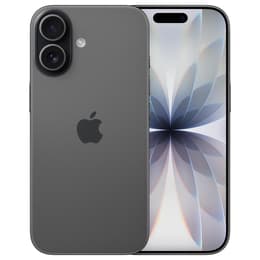
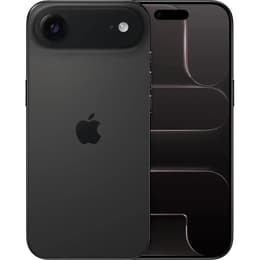
- Camera layout: The iPhone 17 incorporates a dual-lens rear camera system with wide and ultra-wide sensors, whereas the iPhone Air employs a single-lens 48-megapixel configuration integrated into a raised camera plateau.
- Everyday photography: Both devices excel at capturing detailed portraits and balanced low-light shots using advanced computational photography features.
- Audio and media: Speaker output delivers clear sound for calls and media playback, supported by capable microphone arrays for video recording.
Caméra principale
48 megapixels
48 megapixels
Caméra frontale
18 megapixels
18 megapixels
Divers
Practical daily usability is shaped by physical dimensions, weight distribution, and modern connectivity standards present across both product lines.
- Handling and dimensions: The iPhone 17 weighs 177 grams with a traditional thickness, while the iPhone Air prioritizes portability with a featherlight 165-gram build and an exceptionally slim 5.6 mm depth.
- Connectivity: Both models support tri-band Wi-Fi 7, Bluetooth, and 5G networks for fast wireless data transfer.
- Ports and security: Universal USB-C ports handle wired charging and data duties, while secure facial recognition manages device unlocking and authentication.
Poids (en grammes)
177 g
165 g
Taille écran (pouces)
6.3
6.5
Réseau
5G
5G
Carte SIM
eSIM
eSIM
Verrouillage opérateur
Débloqué tout opérateur
Connecteur
USB-C
USB-C
L’avis de la communauté
User feedback from online communities highlights distinct preferences for each device based on daily habits. Owners of the iPhone 17 frequently praise its reliable battery longevity and versatile dual-camera system, making it a dependable choice for general daily tasks. Conversely, users drawn to the iPhone Air emphasize its remarkably thin and lightweight design, appreciating how comfortable it feels to carry and hold. At the same time, some community discussions note that the slim profile results in a smaller battery capacity and a single rear camera lens compared to standard flagship alternatives.
Users prioritizing extended battery life and versatile photography options may prefer the iPhone 17, while users prioritizing an ultra-lightweight form factor and breakthrough thinness will likely lean toward the iPhone Air. Choosing a quality-assured refurbished option through platforms like Back Market provides an eco-friendly alternative that supports sustainable consumption without compromising on device standards. Ultimately, the decision rests on whether physical slenderness or all-around utility holds higher priority for daily routines.