

Galaxy A14 vs Galaxy A15

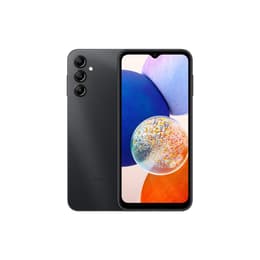
Galaxy A14
Galaxy A14
À partir de

Prix reconditionné :96,00 €

contre 269,00 € neuf

Voir les options
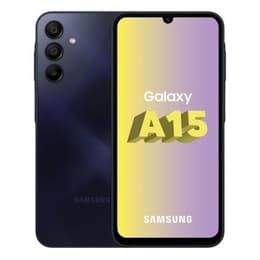
Galaxy A15
Galaxy A15
À partir de

Prix reconditionné :128,00 €

contre 265,32 € neuf

Voir les options

Notes

The Samsung Galaxy A14, released in January 2023, and the Samsung Galaxy A15, launched in December 2023, are both Android smartphones designed for everyday use. While sharing a similar design philosophy, the newer Galaxy A15 introduces notable enhancements in display technology, software longevity, and charging capabilities, setting it apart from its predecessor.

Scores

Durabilité

When considering the long-term usability of these devices, their release timelines and software support policies are key factors.

  • Release Timeline: The Galaxy A14 was introduced in January 2023, making it nearly a year older than the Galaxy A15, which arrived in December 2023. This difference in launch date directly impacts their expected software support windows.
  • OS Support Duration: The Galaxy A14 is expected to receive two major Android OS upgrades, bringing it up to Android 15, along with four years of security updates, typically extending until 2027. [21, 36] In contrast, the Galaxy A15 benefits from a more extended support policy, promising four generations of Android OS upgrades, potentially up to Android 18, and five years of security patches, likely until 2029. [1, 9, 17, 32]
  • Repairability: The Galaxy A14 has been noted for its relatively high repairability, with a score of 8 out of 10, featuring an internal design that facilitates easier battery replacement due to the use of adhesive pull tabs. [10, 38] While specific repairability scores for the A15 are less widely publicized, both devices generally feature a construction that allows for component access, though screen replacement may require more extensive disassembly. [38, 45]

Année de sortie

2023

2023

Compatible dernière mise à jour

Non

Oui

Système d'exploitation

Android

Android

Pliable

Non

Non

Performances

The performance of a smartphone is crucial for daily tasks, from app navigation to multimedia consumption.

  • Processor Capabilities: The Galaxy A15 is equipped with a more recent processor (MediaTek Dimensity 6100+ for the 5G variant or Helio G99 for the LTE variant), which generally translates to a smoother user experience and more efficient handling of applications compared to the Galaxy A14's processor (MediaTek Dimensity 700 for 5G or Exynos 850/Helio G80 for LTE). [1, 3, 13, 15] Users may notice quicker app loading times and more fluid multitasking on the A15. [19]
  • System Responsiveness: While both devices are capable of handling everyday applications and light gaming, the Galaxy A15 tends to offer a more responsive feel, with less noticeable lag during transitions and when switching between multiple applications. [19, 32] The A14, while functional, can sometimes exhibit slight delays, particularly with more demanding webpages or when many apps are open simultaneously. [16, 31]
  • Storage and RAM: Both models offer various configurations of RAM, typically starting from 4GB, and internal storage options, often 64GB or 128GB, with support for microSD card expansion up to 1TB. [1, 4, 15] The Galaxy A15 often provides 128GB as a base storage option, which offers more space for apps and media out of the box. [1, 14, 25]

Mémoire (Go)

4 Go

4 Go

Qualité de l'écran

The display is a primary interface for smartphone interaction, influencing viewing pleasure and outdoor visibility.

  • Display Technology: A significant upgrade on the Galaxy A15 is its 6.5-inch Super AMOLED display, which delivers vibrant colors, deep blacks, and excellent contrast. [1, 8, 14, 26] The Galaxy A14 features a 6.6-inch PLS LCD panel, which provides good visuals but does not match the color richness and contrast levels of an AMOLED screen. [7, 15]
  • Brightness and Clarity: The Galaxy A15's Super AMOLED screen can reach higher brightness levels, up to 800 nits, making it more comfortable to view in direct sunlight. [8, 26] Both phones offer Full HD+ resolution (1080x2408 for A14, 1080x2340 for A15), ensuring sharp text and clear images for typical viewing distances. [4, 7, 8, 15]
  • Refresh Rate: Both the 5G variants of the Galaxy A14 and A15 feature a 90Hz refresh rate, contributing to smoother scrolling and a more fluid visual experience compared to standard 60Hz displays. [4, 8, 15]

Résolution

1080 x 2408

1080 x 2340

Type d'écran

PLS LCD

Super AMOLED

Audiovisuel

Camera capabilities are a key consideration for many users, impacting the quality of photos and videos captured.

  • Rear Camera System: Both the Galaxy A14 and A15 feature a triple rear camera setup, headlined by a 50-megapixel main sensor with an f/1.8 aperture, capable of capturing detailed images in good lighting conditions. [1, 7, 8, 14, 15] The Galaxy A15 distinguishes itself by including a 5-megapixel ultrawide lens (f/2.2), offering more versatility for landscape and group shots. [1, 8, 25] The Galaxy A14 5G typically includes a 2-megapixel depth sensor instead of an ultrawide, while some LTE variants of the A14 may have a 5MP ultrawide. [11, 12, 15, 25, 30] Both also feature a 2-megapixel macro lens. [1, 7, 8, 14, 15]
  • Photography Performance: The main cameras on both phones perform well in daylight, producing images with good detail and color. [16, 31] The Galaxy A15 generally offers better low-light performance and more balanced image processing. [27] The ultrawide lens on the A15 provides a broader perspective, which is a practical advantage over a depth sensor for many users. [25]
  • Video Recording and Front Camera: Both devices support video recording up to 1080p at 30 frames per second from both their rear and 13-megapixel front cameras. [1, 7, 8, 14, 15, 16] The front cameras are suitable for video calls and selfies in well-lit environments. [16]

Caméra principale

50 megapixels

50 megapixels

Caméra frontale

13 megapixels

13 megapixels

Divers

Beyond core features, several practical elements contribute to the overall user experience and device utility.

  • Connectivity Options: Both smartphones support 5G connectivity (for their respective 5G variants), Wi-Fi 5 (802.11 a/b/g/n/ac), and NFC for contactless payments. [7, 8, 11, 13, 15] The Galaxy A15 features Bluetooth 5.3, a slight upgrade from the Galaxy A14's Bluetooth 5.2, potentially offering improved stability and efficiency with compatible accessories. [8, 11, 13, 15]
  • Ports and Sensors: Both devices retain a 3.5mm headphone jack, a feature appreciated by users with wired audio accessories. [7, 8, 11, 13, 15] They both utilize a USB Type-C 2.0 port for charging and data transfer. [7, 8] For security, both include a side-mounted fingerprint sensor integrated into the power button. [11, 12, 15]
  • Design and Build: The Galaxy A15 is slightly more compact and lighter, measuring 160.1 x 76.8 x 8.4 mm and weighing 200g, compared to the A14's 167.7 x 78 x 9.1 mm and 201g. [1, 12, 19] Both phones feature a plastic frame and back with a glass front, offering a durable yet practical build. [19]

Poids (en grammes)

201 g

200 g

Taille écran (pouces)

6.6

6.5

Réseau

4G

4G

Carte SIM

Double SIM physique

SIM physique

Verrouillage opérateur

Débloqué tout opérateur

Débloqué tout opérateur

The Samsung Galaxy A14 and Galaxy A15 both offer solid smartphone experiences, particularly for their segment. User feedback for the Galaxy A14 often praises its reliable battery life and capable main camera for its class. [16, 30, 31] However, some users have noted its performance can be mediocre, with occasional lags, and the LCD display is not as vibrant as higher-end alternatives. [16, 30, 31] The absence of an ultrawide camera on the A14 5G model is also a frequent point of criticism. [25, 30]

The Galaxy A15, being the successor, generally receives praise for its significant display upgrade to Super AMOLED, offering a much more visually appealing experience. [25, 26, 32] Its improved performance, faster charging, and the inclusion of an ultrawide camera are also commonly highlighted as strong advantages. [19, 25, 27] The extended software support policy for the A15 is a notable benefit for users planning to keep their device for a longer period. [9, 32] Criticisms for the A15 are less frequent but sometimes point to the continued presence of chunky bezels and the performance, while improved, still not being top-tier for demanding tasks. [26, 32]

Users prioritizing a vibrant display, longer software support, and faster charging will find the Galaxy A15 well-suited to their needs. It offers a more refined overall experience for those who value multimedia consumption and a slightly more future-proof device. Conversely, users who are content with a functional LCD display and prioritize a slightly lower initial investment might still find the Galaxy A14 to be a practical choice, especially if they value its noted repairability. Both devices represent a sustainable choice when considering a quality-assured refurbished option, extending their lifecycle and reducing electronic waste.

Découvrez tous nos articles

Nos comparaisons récentes