
Comparer les modèles

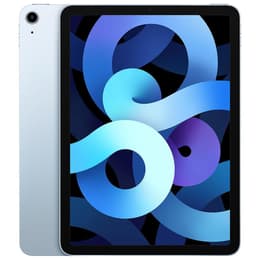
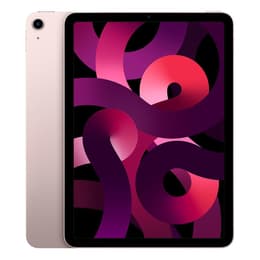
iPad Air 4 (2020, A14 series) vs iPad Air 5 (2022, M1 series)

  • Garantie commerciale de 12 mois
  • Livraison standard offerte
  • Retour gratuit sous 30 jours
iPad Air 4 (2020, A14 series)
À partir de

Prix reconditionné :362,00 €

contre 669,00 € neuf

Voir les options
iPad Air 5 (2022, M1 series)
À partir de

Prix reconditionné :440,00 €

contre 789,00 € neuf

Voir les options

Aperçu des différences

The iPad Air 4 (2020) and iPad Air 5 (2022) are mid-tier tablets from Apple that share a nearly identical exterior form factor and screen size. While both devices run on iPadOS and offer similar everyday utility, the iPad Air 5 transitions to a desktop-class architecture that noticeably expands its multitasking capabilities. Choosing between these two generationally adjacent tablets depends heavily on performance priorities and workflow demands.

Modèles disponibles

Couleur

Capacité de stockage (Go)

Scores

Durabilité

Both tablets share similar physical durability profiles and long-term support timelines, though their release dates create a distinct window for future software updates.

  • Release timeline and support: The iPad Air 4 arrived in late 2020, while the iPad Air 5 launched in early 2022, giving the newer model an extra year and a half of expected software lifespan.
  • Repairability and build: Both models utilize aluminum enclosures and laminated glass screens that score similarly for structural rigidity, requiring professional assistance for internal repairs like battery replacements.
  • Practical lifespan: Both units comfortably last through multiple years of daily tasks, though the newer internal components of the Air 5 position it to handle heavy future operating system demands slightly longer.

Année de sortie

2020

2022

Compatible dernière mise à jour

Oui

Oui

Système d'exploitation

iPadOS

iPadOS

OS maximum supporté

iPadOS 18

iPadOS 18

Performances

Performance represents the most significant divergence between these two generations, shifting from a smartphone-derived processor to a desktop-grade powerhouse.

  • Storage and multitasking: Both devices offer identical storage tiers starting at 64GB, but the iPad Air 5 doubles its system memory, allowing for smoother handling of split-screen apps and heavy background processes.
  • Processor capabilities: The iPad Air 4 handles daily web browsing, streaming, and moderate productivity smoothly, while the iPad Air 5 executes demanding 3D rendering, video editing, and complex multi-app workflows with greater thermal efficiency.
  • Battery behavior: Both models deliver standard all-day battery performance lasting up to ten hours of continuous web browsing or video playback under typical use cases.

Processor

Apple A14 Bionic

Apple M1

Qualité de l'écran

The visual viewing experience remains nearly identical across both generations due to shared display hardware specifications.

  • Display technology: Both devices feature a 10.9-inch Liquid Retina IPS LCD panel with full lamination, wide color support, and True Tone technology for balanced color accuracy under shifting ambient light.
  • Brightness and clarity: Each display reaches a maximum brightness of 500 nits alongside a resolution of 2360 by 1640 pixels, ensuring clear text and vibrant media consumption indoors and in moderate outdoor light.
  • Refresh rate: Both models utilize a standard 60Hz refresh rate, providing smooth scrolling for everyday navigation and standard video playback.

Résolution

2360 x 1640

2360 x 1640

True Tone

Oui

Oui

Pro-Motion

Non

Non

Type d'écran

Écran Liquid Retina

Écran Liquid Retina

Densité des pixels

264ppp

264ppp

Luminosité

Luminosité de 500 nits

Luminosité de 500 nits

Qualité du son

Hauts-parleurs

Haut‑parleurs stéréo

Haut‑parleurs stéréo

Audiovisuel

Media consumption and front-facing video capabilities present a noticeable functional difference for digital communication.

  • Front-facing optics: The iPad Air 4 features a standard 7-megapixel FaceTime camera, whereas the iPad Air 5 upgrades to a 12-megapixel ultra-wide sensor equipped with automatic framing software to keep users centered during video calls.
  • Rear camera system: Both models house a single 12-megapixel wide rear camera that captures crisp everyday photos, scans documents efficiently, and records stable video up to 4K resolution.
  • Audio output: Dual landscape stereo speakers on both tablets deliver balanced sound output for casual music listening, video streaming, and virtual meetings.

Divers

Physical dimensions and connectivity standards are largely aligned, with one major network enhancement on cellular configurations.

  • Connectivity options: Both models support Wi-Fi 6 and Bluetooth 5.0, but cellular configurations of the iPad Air 5 add compatibility with faster 5G networks compared to the 4G LTE limits of the older generation.
  • Ports and security: Both tablets rely on a reversible USB-C port for charging and data transfer, and integrate a Touch ID fingerprint sensor directly into the top power button for biometric authentication.
  • Handling and dimensions: Sharing identical measurements and weighing roughly 460 grams, both models fit into the exact same protective cases and keyboard accessories.

Poids (en grammes)

458 g

461 g

Largeur

17.85 cm

17.85 cm

Hauteur

24.76 cm

24.76 cm

Profondeur

0.61 cm

0.61 cm

Taille écran (pouces)

10.9

10.9

Réseau

WiFi

WiFi

Verrouillage opérateur

Sans port SIM

Sans port SIM

Technologie WiFi

Wi-Fi 6 802.11ax

Wi-Fi 6 802.11ax

Version bluetooth

Bluetooth 5.0

Bluetooth 5.0

Face ID

Non

Non

Touch ID

Oui

Oui

Connecteur

USB Type-C

USB Type-C

L’avis de la communauté

User feedback across online communities highlights the iPad Air 4 as a reliable, cost-effective tool for standard media consumption, note-taking, and casual web browsing. Owners frequently praise its premium design and stable daily performance. Conversely, iPad Air 5 users emphasize the noticeable multitasking benefits of the expanded memory and advanced processor, though some note that standard app usage feels nearly identical between the two. Users prioritizing standard web browsing, reading, and streaming will find the iPad Air 4 well-suited to their needs, while those running demanding creative applications or requiring extended software longevity may prefer the processing headroom of the iPad Air 5. Choosing a quality-assured refurbished option provides an eco-friendly way to access either model while reducing electronic waste. Ultimately, the decision rests on whether your workflow demands desktop-class performance or simple everyday efficiency.